
What you will learn in this guide: what SEO means, how it works step by step, the main types of SEO, why your business needs it, and how to start today. Whether you run a small local shop or a growing e-commerce brand, this guide gives you a clear and practical foundation.
What Is SEO and Why Does It Matter?
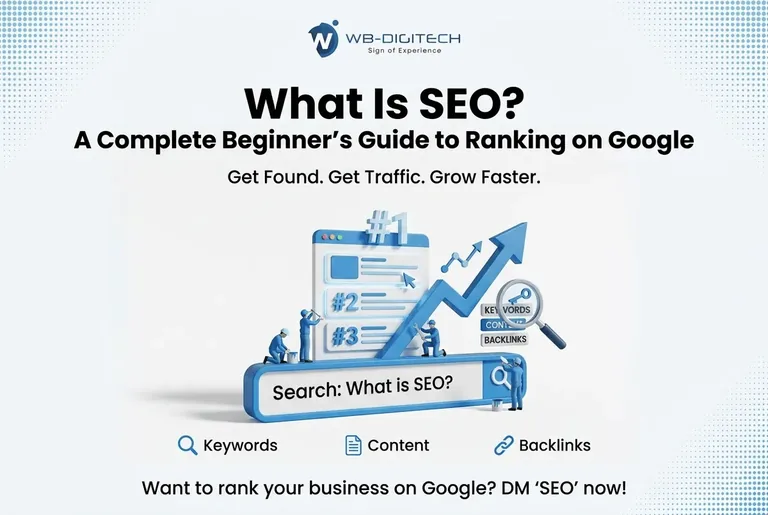
SEO stands for Search Engine Optimization. It is the practice of improving your website so that it appears higher in search engine results pages commonly called SERPs. When someone types a question into Google, SEO decides which websites appear at the top and which ones get buried on page two or beyond.
Think of it this way. You open a new shop in a busy city. SEO is the sign above your door, your reputation in the neighborhood, and the road that leads customers directly to you. Without it, your shop exists but nobody finds it.
Working with a trusted best SEO agency in Dubai helps businesses rank for the right keywords and reach their ideal audience at the exact moment those people are searching.
The Core Goal of SEO Optimization
The main goal of SEO optimization is simple: help search engines understand what your pages are about, and convince them that your content is the best answer to a user's query. You do this by working on three pillars:
- Content relevance your page answers what the user actually searched for
- Technical health your site loads fast, works on mobile, and is easy for Google to crawl
- Authority signals other credible websites link to you and trust your brand
When all three align, your rankings improve and so does your organic traffic, leads, and revenue.
How Search Engines Work
Before you can optimize a website, you need to understand how search engines operate. Google follows three core steps every time it processes the web.
Step 1 — Crawling
Google sends out automated bots called Googlebot. These bots travel across the internet following links from page to page. They read your content and report back to Google's servers. If your pages are blocked by a robots.txt file or have broken links, the bots cannot reach them and those pages never appear in search results.
Step 2 — Indexing
After crawling, Google stores the pages it discovers in a massive database called the index. A page that is not indexed simply does not exist for search purposes. Issues like duplicate content, noindex tags, or thin pages can prevent indexing. Running regular SEO audit services helps you catch these problems before they cost you rankings.
Step 3 — Ranking
This is where the magic happens. Google uses over 200 ranking factors to decide which indexed pages deserve to appear and in what order for a given search query. Relevance, page speed, mobile friendliness, backlinks, and user experience all play a role.
The 4 Main Types of SEO
SEO is not one single task. It breaks down into four interconnected disciplines. A strong strategy covers all of them.
1. On-Page SEO
On-page SEO covers everything you control directly on your web pages. This includes:
- Title tags — the clickable headline that appears in search results
- Meta descriptions — the short summary below the title in SERPs
- Header tags (H1, H2, H3) the structure that organizes your content
- Keyword placement using your target phrases naturally in the text
- Internal linking connecting related pages within your own site
- Image alt text describing images for both users and search engines
Why On-Page SEO Matters
On-page SEO sends clear signals to Google about what your page covers and who it serves. Without proper on-page optimization, even the best content can fail to rank because Google struggles to understand its purpose.
2. Off-Page SEO
Off-page SEO refers to actions taken outside your website that affect your rankings. The most important off-page factor is backlinks links from other websites pointing to yours. A link from a respected site acts like a vote of confidence in your content.
What Makes a Good Backlink?
- It comes from a website with high domain authority
- It is relevant to your industry or topic
- It uses descriptive anchor text
- It is a dofollow link (passes link equity)
Google's E-E-A-T framework Experience, Expertise, Authoritativeness, and Trustworthiness also falls under off-page signals. Author credentials, brand mentions across the web, and editorial coverage all reinforce your site's authority in Google's eyes.
3. Technical SEO
Technical SEO ensures that search engines can crawl, index, and rank your site without friction. It covers the behind-the-scenes infrastructure of your website.
| Technical Factor | Why It Matters |
| Page speed (Core Web Vitals) | Slow pages frustrate users and hurt rankings |
| Mobile-first design | Google primarily uses the mobile version to rank pages |
| HTTPS / SSL certificate | Security is a confirmed Google ranking signal |
| XML sitemap | Helps Google discover all your important pages |
| Structured data / schema markup | Enables rich results like star ratings and FAQs in SERPs |
| Canonical tags | Prevents duplicate content from splitting ranking power |
A professional SEO audit services review covers all these technical elements and gives you a clear action plan to fix them.
4. Local SEO
Local SEO helps businesses appear in location-based searches like digital marketing agency near me
or SEO services in Dubai. It focuses on your Google Business Profile, local citations, customer reviews, and location-specific keyword targeting.
If you run a service-based business in a specific city, local SEO is one of the highest-ROI investments you can make. The best SEO agency in Dubai will prioritize your Google Maps presence and local search visibility alongside your organic rankings.
Key Ranking Factors in 2026
Google uses hundreds of signals, but the ones below consistently carry the most weight. If you master these, you are already ahead of most competitors.
Content Quality and Search Intent
Google wants to give users the most helpful and relevant result. Your content must match what the user actually wants — this is called search intent. There are four types:
- Informational — the user wants to learn something
- Navigational — the user wants a specific site
- Transactional — the user wants to buy or sign up
- Commercial investigation — the user is comparing options
Matching your content format and depth to the correct intent is one of the highest-impact actions in SEO optimization.
E-E-A-T Signals
Google evaluates pages using its E-E-A-T framework:
- Experience — does the author have firsthand experience with the topic?
- Expertise — does the content demonstrate deep knowledge?
- Authoritativeness — is the website recognized as a leader in its field?
- Trustworthiness — is the site secure, accurate, and transparent?
Add author bios, cite credible sources, earn backlinks from reputable sites, and display trust badges. These actions directly improve your E-E-A-T profile.
Page Experience and Core Web Vitals
Google measures how users experience your pages with a set of metrics called Core Web Vitals. The three main ones are:
- LCP (Largest Contentful Paint) — how fast your main content loads (target: under 2.5 seconds)
- INP (Interaction to Next Paint) — how quickly the page responds to clicks (target: under 200ms)
- CLS (Cumulative Layout Shift) — how stable the layout is as the page loads (target: under 0.1)
SEO vs Paid Ads: What Is the Difference?
Many business owners ask: Should I run Google Ads or invest in SEO? The honest answer is both — but they serve different purposes.
| Factor | SEO | Paid Ads (PPC) |
| Cost per click | Free (after investment) | You pay for every click |
| Time to results | 3–6 months | Immediate |
| Long-term value | High (compounds over time) | Stops when budget runs out |
| Trust level | Higher (organic results trusted more) | Lower (marked as "Sponsored") |
| Best for | Sustainable growth | Fast launches and promotions |
A reputable digital marketing agency will help you balance both channels based on your business goals, budget, and timeline. SEO builds a long-term asset; paid ads give you short-term speed.
How to Build a Basic SEO Strategy
You do not need to be a technical expert to start with SEO. Follow these five steps to build a solid foundation.
Step 1 — Keyword Research
Find out what your target audience actually types into Google. Use tools like Google Keyword Planner, Ahrefs, or SEMrush. Look for keywords with a healthy search volume but manageable competition. Prioritize long-tail keywords — longer, specific phrases that convert better and face less competition.
Step 2 — Create High-Quality Content
Write content that genuinely helps your reader. Cover the topic thoroughly, answer related questions, and use natural language. Avoid keyword stuffing it hurts rankings and reads poorly. Instead, use LSI (Latent Semantic Indexing) keywords semantically related terms that give Google a fuller picture of your topic.
Step 3 — Optimize Your Pages
Apply on-page best practices: place your primary keyword in the title tag, H1, first paragraph, and URL. Write a compelling meta description. Use H2 and H3 subheadings to organize your content. Add internal links to related pages on your site.
Step 4 — Fix Technical Issues
Run a technical crawl using tools like Screaming Frog or Google Search Console. Fix broken links, improve page speed, ensure mobile responsiveness, and submit your XML sitemap. Any professional digital marketing agency will include a full technical review as part of their onboarding process.
Step 5 — Build Authority Over Time
Earn backlinks through guest posts, digital PR, partnerships, and creating content people want to share. Monitor your rankings monthly and keep your content updated. SEO is a long-term game consistency wins.
Frequently Asked Questions
How long does SEO take to show results?
Most websites start seeing measurable improvements in 3 to 6 months. However, results depend on your industry's competition, your site's current health, and how consistently you apply SEO best practices
What is the difference between on-page and off-page SEO?
On-page SEO covers everything you do directly on your website — titles, content, headings, internal links, page speed, and schema markup. Off-page SEO refers to actions outside your site that build your authority primarily earning backlinks from other websites, gaining brand mentions, and building your E-E-A-T profile.
Do I need to hire a professional SEO agency?
You can learn and apply basic SEO yourself, but a specialist brings tools, experience, and strategic direction that accelerates results. Partnering with the best SEO agency in Dubai gives you access to expert keyword strategies,
What is an SEO audit and why do I need one?
An SEO audit is a comprehensive review of your website's technical health, on-page optimization, content quality, and backlink profile. It identifies the exact issues holding your rankings back and provides a prioritized list of fixes.
Is SEO still relevant in 2026 with AI-powered search?
Yes and more than ever. AI tools like Google's AI Overviews, ChatGPT, and Perplexity still pull from indexed web content to generate answers.